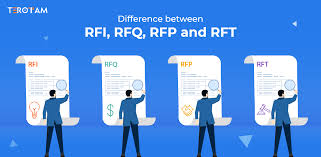

RFI and RFP Process is a significant instrument that can be used by companies that desire to purchase goods and services in a smart manner. RFI is an abbreviation of Request of Information and RFP is Request of Proposal. The companies go through these processes to get to know more about the suppliers, compare alternatives, and make optimal purchasing choices. RFI and RFP Process can be used instead of emails, telephone calls, or paper and keeps all the things in a single location. It saves time, minimizes errors and makes the purchase process equitable to all the buyers.
The RFI and RFP Process also assists the businesses in saving money. The suppliers will give detailed information, prices, and ideas and therefore the managers will be able to select the best one. This is one of the steps in the greater procurement process, and usually it comes together with such tools as supplier assessment and online bidding sites. The companies which adhere to such a process are more intelligent, structured, and can establish good relationships with their suppliers.
What does the RFI and RFP Process Entail?
The RFI and RFP process entails a series of steps through which companies identify the appropriate suppliers. To begin with, during the stage of the RFI (Request for Information), businesses request suppliers to answer questions regarding their experience, products, services, and capabilities. This stage involves gathering details to better understand potential suppliers before making a decision on who to work with. RFI is normally brief and concise and provides companies with a quick overview of the market. Many organizations also use request for quotation software to streamline the process, manage supplier responses efficiently, and prepare for the next stages such as RFQ and RFP.
Then there is the stage of RFP (Request for Proposal). Under this step, the companies will request the suppliers to provide elaborate proposals such as prices, delivery times and terms of the contract. RFP is more official and assists companies in selecting the most appropriate supplier. RFI and RFP combined simplify the purchasing process and make it transparent, organized and efficient. They are necessary components of the bidding process and assist businesses to make wise decisions.
Significance of RFI and RFP Process
The RFI and RFP Process is significant in that it avoids errors in purchasing. Lack of it can make companies pick the wrong supplier, or even spend excessive funds. Through this process, the managers are able to observe the supplier that offers the most favorable price, quality and service. It also renders the buying process fair hence important particularly in big companies.
The other reason why it is significant is time-saving. Businesses are able to pool all the responses as opposed to sending emails or calling several suppliers. This is also useful in supplier evaluation where the supplier is graded on the basis of reliability, quality and experience. The RFI and RFP Process companies are better structured and make smarter procurement decisions.
RFI and RFP Process Steps
There are easy steps in the RFI and RFP Process that ease the procurement.
Develop an RFI document that requests basic information on the company and products of suppliers.
- View RFI responses and choose suppliers to proceed.
- Ask suppliers whom you select to submit detailed proposals containing prices, time of delivery and terms of the contracts.
- Be sure to review proposals, compare offers and ask follow-up questions when necessary.
- Select the most optimal supplier and begin dealing with them.
The process makes sure that companies do not make decisions made on guesses. It is an aspect of the greater procurement cycle, and it assists the companies in saving money and preventing errors.
Advantages of RFI and RFP Process
Among the advantages of the RFI and RFP Process, there is improved decision-making. Businesses are able to do comparisons of numerous suppliers and settle on the one that will suit their requirements. Another benefit is fairness. Information is shared with all suppliers and they have an equal opportunity to offer. This creates trust and enhances business relationships.
The process also saves time. Companies can keep all data in a single system rather than making a call to the numerous suppliers. RFI and RFP also enhance supplier assessment as it is easy to know which suppliers are good, provide quality products, and deliver when they are supposed to deliver. The RFI and RFP Process in general simplifies procurement, makes it fast and intelligent.
Difficulties during the RFI and RFP Process
Although the RFI and RFP Process is handy, there are companies that experience challenges. Problems in writing clear RFI and RFP are one of the challenges. In case of misunderstanding of instructions, suppliers can give incorrect or partial information. The other issue is evaluating a large number of proposals and it might be time consuming and laborious.
There might be instances where the suppliers fail to reply or make half baked offers. The process also requires employment of trained staff by the companies. Irrespective of these, RFI and RFP Process is quite effective when done well. Clarity, planning and tools enable one to easily locate the best suppliers and save money in procurement.
Best Practices for the RFI and RFP Process
To make the RFI and RFP Process successful, companies should follow these best practices:
- Be clear and simple in writing RFI and RFP documents. Clear questions lead to better responses.
- Use scoring systems to evaluate suppliers fairly. This makes supplier evaluation easier.
- Communicate with suppliers regularly to answer questions and provide updates.
- Keep all documents organized and track the process using software tools.
By following these best practices, the RFI and RFP Process becomes easier, faster, and more effective. Companies can choose the right supplier without mistakes or delays.
RFI vs RFP Quick Comparison Table
| Feature | RFI (Request for Information) | RFP (Request for Proposal) |
| Purpose | Collect basic supplier information | Collect detailed proposals |
| Detail Level | Simple, short | Detailed, formal |
| Timing | First step in procurement | After RFI, to select best supplier |
| Focus | Supplier capabilities, experience | Prices, delivery, terms, solutions |
| Outcome | Shortlist of suppliers | Final proposal selection |
This table shows how RFI and RFP work together to make the procurement process smarter and more organized.
Conclusion
RFI and RFP Process is an effective means through which companies purchase goods and services in an intelligent, structured and equitable manner. RFI will assist in gathering general supplier details, whereas RFP will assist in receiving comprehensive offers. They both simplify the process of supplier evaluation and assist businesses in making improved decisions.
The time saved and errors minimized by use of this process and fairness. Although there are challenges, it is highly effective through the best practices. RFI and RFP Process is a crucial component of an overall procurement process, which assists the company to be more organized, efficient and competitive in the current business environment.

