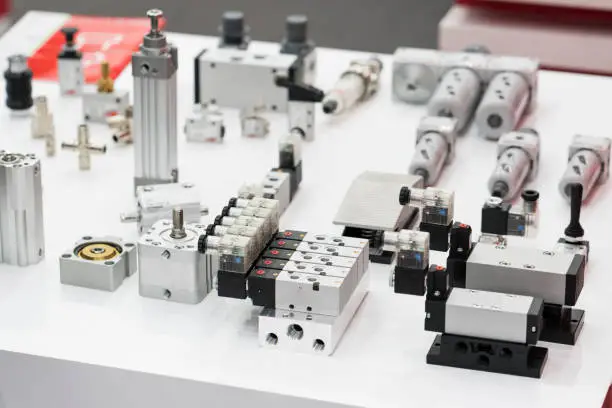

Industrial automation relies on pneumatic systems for efficiency, precision, and dependability. These systems utilize various pneumatic components that transform compressed air into mechanical movement. Pneumatics ranges from manufacturing plants, to automation technology packaging and assembly lines, and remains a foundational technology in modern automation.
For firms looking for quality pneumatic systems and components, Omchele offers various pneumatic valves and other components that industrial systems can utilize with reliability and efficiency across a range of industrial applications.
What Are Pneumatic Components?
Pneumatic components are mechanical parts that employ compressed air as a power source to accomplish tasks. Pneumatic systems are distinctly different from electrical or hydraulic systems. Pneumatics can work, control, move, press, and even hold various materials with the air that is flowing through them. You will likely find them in systems that are repetitive in nature and do tasks like clamping, lifting, and machine actuation.
Examples of common pneumatic components are:
- Pneumatic cylinders: Devices that transform compressed air into linear motion.
- Pneumatic valves: Components that manipulate the air’s direction, pressure, and flow.
- Air treatment units: FRLs that balance, filter, and regulate lubricants for a consistent air supply.
- Tubing and fittings: Channels that move compressed air in a pneumatic system.
- Sensors and switches: Identify movement, pressure, and location in a pneumatic system.
Every component serves a purpose when it comes to the overall proficiency and accuracy in a process, features that pneumatic components have come to be a staple in the automation of modern industries.
The Role of Pneumatic Components in Industrial Automation
Automation in the industry intertwines mechanical movement with the control of electronics. Pneumatics provides the link with quick, dependable, and energy effective movement control. Pneumatic components are also perceived for their safety, simplicity, and high-speed repetitive task completion.
Speed and Accuracy
Pneumatic systems are designed to perform rapid sequences with limited to no delay making systems for automated assembly lines and packaging operations a breeze. Pneumatic cylinders specifically are capable of performing thousands of cycles, and doing so with precision during every single one.
Reliability and Low Maintenance
Pneumatic components contain less moving parts, which refers to mechanical failure, so become less subject to it than their hydraulic and electronic counterparts. Additionally, their requirement for lubrication and maintenance is significantly less, thus becoming economically practical for enduring use.
Safety and Clean Operation
It makes sense for manufacturers to use pneumatically controlled systems to avoid the dangers associated with oil leaks and electricity. That is why they use them in food packaging, drug production, and electronics assembly. There is a high demand for safe and tidy machines in these industries.
Types of Common Pneumatic Components
Because of varying approaches to industrial processes, pneumatic systems come in different designs. Some of the key types of pneumatic components and their functions are described below.
Pneumatic Cylinders
Pneumatic cylinders, or actuators, use compressed air to accomplish linear or rotary functions. There are different kinds.
- Single-acting cylinders have a spring return, and so their operation is in one direction only.
- Double-acting cylinders have greater control as they allow motion in both directions.
- Rotary actuators are meant for particular tasks such as indexing or positioning where the application needs rotational motion.
Pneumatic Valves
Pneumatic valves determine the directional flow and the compressed air volume range. Directional control, pressure control, and flow control are the three types of these valves. They are vital in control of precise movement as well as the regulation of the system.
Pneumatic valves have a wide range of industrial applications. For manufacturers looking for robust and effective valves, https://www.omchele.com/es/pneumatic-valves/ .
Air Preparation Units
To maintain the efficiency of pneumatic systems, compressed air needs to be clean, dry, and suitably lubricated. Air preparation units are composed of:
- Filters to capture moisture and dust.
- Regulators to ensure consistent pressure.
- Lubricators to help moving parts last longer.
Connectors, Tubes, and Fittings
These parts link various pneumatic components, enabling air circulation between valves, cylinders, and actuators. System efficiency, air-tightness, and the quality of fittings and tubing are interconnected.
Sensors and Switches
Proximity and pressure sensors are examples of modern automation feedback systems. Sensors and switches help track and mitigate possible failures within the system.
Advantages of Pneumatic Systems in Industrial Applications
Due to their operational simplicity and competitive pricing, pneumatic systems uphold their popularity in various industrial fields. Below are the most notable perks:
Durability and Longevity
Pneumatic components handle operational challenges like high temperatures, dust, and vibrations. They reliably perform in challenging environments which, in turn, harsens production conditions.
Cost Efficiency
When it comes to installation and upkeep, pneumatic systems tend to be more economically viable compared to their hydraulic and electric counterparts. Additionally, the use of compressed air facilitates the convenient and efficient power distribution to several machines.
Energy Efficiency
Having the right pneumatic systems in place and the proper upkeep will lead to admirable results in energy efficiency. With the addition of energy recovery systems and advanced control valves, the systems will further optimize air consumption.
Ease of Integration
Pneumatic system components are easy to organize and add to pre-existing production lines. The standardized design of these components permits them to work seamlessly with numerous automation control systems, which include PLCs and smart controllers.
Future Trends in Pneumatic Technology
Pneumatics technology is still adapting to the growing demands of industrial automation and smart manufacturing.
Smart Pneumatics
With the addition of sensors and other IoT components pneumatic systems are “smart” and can perform real-time monitoring and predictive maintenance. This significantly improves efficiency by decreasing downtime.
Energy Optimization
There is a growing focus within the industry on eliminating leaking air from the system. Additionally, the use of intelligent air management systems to control and limit compressor energy use is on the rise.
Lightweight and Compact Designs
Pneumatic components are getting smaller and lighter while keeping the strength and performance intact. This makes them suitable for robotics, as well as production lines that are getting increasingly compact.
Sustainable Manufacturing
Companies are becoming environmentally conscious and are therefore using eco-friendly materials along with cleaner production methods for pneumatic components. Systems that utilize air-powered components result in greener operations as they lessen the waste produced from oil.
Conclusion
Pneumatic components have become an integral part of industrial automation. They efficiently control motion in a safe and reliable manner and do so in a wide array of applications. Their pneumatic automation systems are a testament to the ongoing modern manufacturing systems.
Omchele contributes to the evolution of these systems with the high quality pneumatic components and valves. They support the global industry with innovative automation systems that are effective, sustainable, and designed for the future.
Pneumatics technology continues to connect mechanical motion and intelligent control, automating advanced processes in manufacturing while powering the future of industrial automation.

