
Healthcare organizations today face growing challenges—from rising patient expectations and staffing shortages to complex regulations and rapid technological change. In this environment, adopting healthcare quality improvement strategies is no longer optional; it is essential for delivering safer, more efficient, and more patient-centered care.
Clinical consultants help healthcare systems bridge the gap between clinical excellence and operational performance. By combining medical insight with structured improvement frameworks, consultants support hospitals, clinics, and health organizations in building sustainable systems that improve outcomes over time.
What Do Clinical Consultants Do?
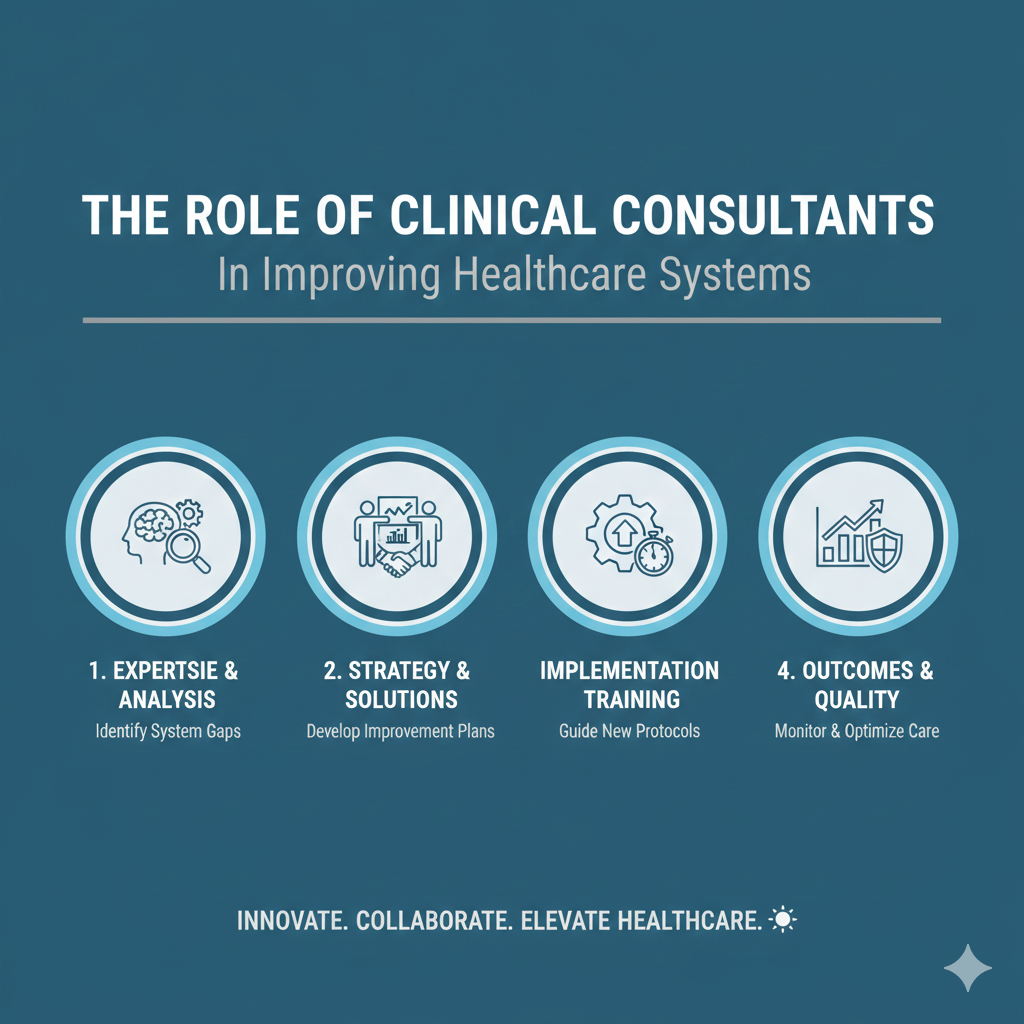
Clinical consultants are experienced professionals who evaluate healthcare delivery models, identify inefficiencies, and recommend actionable solutions. Their work often includes:
• Reviewing clinical workflows and patient pathways
• Supporting accreditation and compliance initiatives
• Strengthening patient safety and risk management programs
• Helping leadership teams implement evidence-based improvements
Unlike general business consultants, clinical consultants focus on healthcare-specific challenges where patient outcomes and safety are central priorities.
Improving Patient Outcomes Through Data-Driven Insight
Modern healthcare generates enormous amounts of data—from electronic health records to quality reporting metrics. Clinical consultants help organizations interpret this data to uncover gaps in care.
For example, consultants may identify trends in readmissions, delayed diagnoses, or treatment variation across departments. By translating findings into structured improvement plans, healthcare teams can reduce preventable complications and improve consistency of care.
Enhancing Operational Efficiency Without Sacrificing Care
Operational efficiency is one of the most urgent needs in healthcare systems. Long wait times, resource constraints, and fragmented workflows can negatively affect both patients and staff.
Clinical consultants streamline processes by redesigning workflows, improving care coordination, and reducing unnecessary steps in clinical operations. The result is often better patient flow, reduced costs, and improved staff satisfaction.
Supporting Compliance and Risk Reduction
Healthcare organizations must meet evolving regulatory and accreditation standards. Failure to comply can lead to penalties, reputational damage, and increased liability.
Clinical consultants support organizations in aligning policies with best practices, improving documentation processes, and strengthening governance. This proactive approach reduces risk and helps healthcare leaders maintain high standards of care delivery.
Building a Culture of Continuous Improvement
One of the most valuable contributions of clinical consultants is helping organizations create long-term improvement cultures. Sustainable success requires more than a single intervention—it requires staff engagement, leadership alignment, and continuous monitoring.
Consultants often introduce structured frameworks such as Lean healthcare principles, patient safety bundles, and quality improvement cycles that allow teams to track progress and adapt over time.
Conclusion
Clinical consultants play an essential role in helping healthcare systems deliver safer, more effective, and more efficient care. Organizations that invest in expert clinical consulting services benefit from strategic guidance, measurable improvement initiatives, and long-term performance optimization.
As healthcare continues to evolve, clinical consulting will remain a key driver of innovation, patient safety, and quality outcomes.

