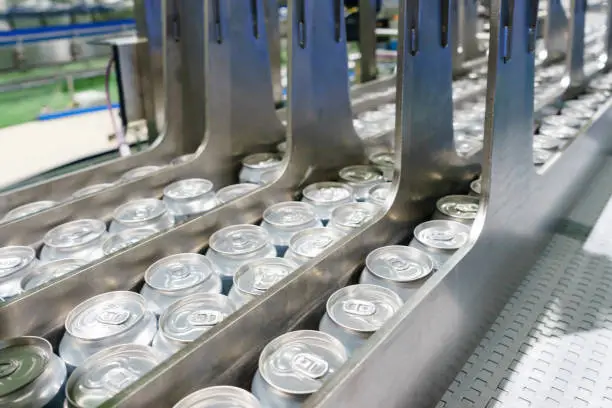

In recent years, technology and innovation have greatly altered the food packaging industry. Many innovations have contributed to operational efficiency, increased safety, and quality consistency, however, modern canning lines stand out among the others. How manufacturers package food, beverages and even non food products has been transformed by these fully automated, reliable and sanitary systems in comparison to the old systems.
Levapack has the latest technologies to develop canning systems that best meet safety and productivity needs. More information is available here:https://www.levapack.com/ru/product-category/canning-lines/ .
Movement from Conventional to New Canning Processes
Canning is one of the oldest food preservation methods. It is over one hundred years old. Initially, the process involved sealing the food in airtight containers, prolonging the food’s shelf life. During the first period of industrial canning, the canning process was dominated by the use of human labor. Filling, sealing and labeling the cans were entirely done by hands which was an incredibly time consuming process. In addition, it was a highly inconsistent process that resulted in the contamination of the food.
Manufactures began to include basic automated systems into production lines when industrialization began. Even though these systems aided efficiency, made operational speed quicker, and advanced the production line; they still needed a great deal of worker supervision. They also had a lack of accuracy and the production lines had temperature swings that caused sealing inconsistencies that could lead to spoilage.
The creation of modern canning lines shifted the focus of the industry. These systems work seamlessly with multiple stages of production that include: cleaning, filling, sealing, labeling, and inspecting. Each of these steps is monitored and controlled through the use of digital sensors that assure accuracy. Because of the complexities of rapid human error, automation was able to offer a solution that achieved consistency, improved hygiene, and increased throughput.
Another advancement made is speed and intelligence. Smart technologies provide manufacturers with the ability to watch each moving part closely which helps in optimizing operational efficiency while also remaining compliant with the production of safe food.
The Other Benefits of Automation and intelligent Integrative Systems
The other benefit of intelligent integrated systems is the ability to enhance the speed of production. The speed of production is the number one reason that manufacturers look to install modern canning lines. In mass production, small inefficiencies can lead to a compromised financial outcome and modern canning systems enhance speed through the use of integrative automation.
Filling machines can fill thousands of cans hourly with perfect accuracy. Servo driven systems can detect how much of a product (liquid, paste, or granule product) needs to be dispensed into each can. This accuracy ensures there is little to no product waste or brand reliability issues.
Additionally, seamless integration between filling, sealing, and labeling further reduces production bottlenecks. Instead of needing manual transfers between each process, cans can move along automated conveyor belts controlled by PLCs. This increases the overall synchronization of each process, increasing production velocity, and decreasing idle time.
A modern canning line balances the process by allowing a quick changeover between various can sizes, materials, and even processes. This can be especially advantageous for B2B producers needing to manage varying product types and packaging formats.
In the end, the most advantageous aspect of automation is the ability to give manufacturers higher production goals without sacrificing product quality. This is a unique offering on the market, as most manual systems cannot offer this.
The Safety and Hygiene of Food in Modern Canning Technologies
Investments in efficiency during a food packaging process are often countered by food safety issues during that same process. Food safety issues during packaging processes can lead to recalls and contaminated brand reputations. Modern canning lines are built with food safety as a primary focus.
During the canning process, there is brand reputational damage prevention in the food safety systems as a part of container preparation, filling, and sealing. Systems for filling cans are safer from contamination in that they use air and water in a sterilized manner, and some hand-use filling systems are constructed in a way that they do not drip.
Loss of a product’s freshness and the presence of anaerobic bacteria are made less likely by the use of vacuum and nitrogen gas systems to remove oxygen before a can’s lid is welded on. Along with advanced sealing systems that seal cans with a seam that is air-tight, the can also remains safe from transport, storage, and temperature changes.
Food safety is further heightened by the less manual systems that are used for the internal cleaning and sterilization of the equipment in a process that is known as Clean in Place. The automation of the less manual systems also saves time and the labor required.
Modern canning lines utilize inspection technologies such as metal detectors, X-ray scanners, and sight systems that catch errors and leaks. These inspection technologies are integrated directly with the canning systems. Automation systems remove any non-compliant products, ensuring that all products meet safety and quality regulations and leaving no room for errors.
Sustainability and Resource Optimization
With the growing concerns regarding the environment, the design of industrial packaging has also changed. In particular, the canning lines have undergone significant changes as food and beverage companies try to reduce their carbon footprints.
Smart control systems, energy-efficient motors, and recyclable materials are some of the features that reduce the overall energy consumption of the machines. Cutting-edge servo technology, energy recovery systems, and water recycling systems have also been integrated into the more advanced canning lines. By using these systems, Levapack can meet their customers’ demands for providing canning lines that improve productivity, while also improving their environmental footprints.
Can considerations also play an important role in sustainable canning lines. Metal cans can be recycled but are also designed to reduce food waste within the supply chain. Food waste is further reduced when modern canning systems are used that focus on improving sealing and using less materials.
It’s a challenge that many manufacturers including Levapack strive to meet, helping their customers sustain a balance between productivity and environmental performances.
Smarter Systems and Predictive Technologies in the Canning Industry
Canning lines are adopting increased connectivity, smarter systems, and automated predictive processes as they evolve with Industry 4.0. Advanced data analytics, Artificial Intelligence (AI), and the Industrial Internet of Things (IIOT) have become essential elements of the optimization of the packaging line.
Smart sensors track several operational parameters such as temp, pressure, and line speed. These parameters are evaluated, in real-time, to identify and respond to operational issues. Predictive maintenance systems improve machine uptime by alerting operators to issues before they occur, thus improving overall machine reliability.
With the advent of remote monitoring, plant managers can track several production lines via a primary control screen, even across different plants. This capability improves productivity and meets the heightened traceability demands of modern food safety regulations.
AI systems also fill and seal containers. These systems can improve operational efficiency in real time by self-adjusting to operational parameters to reduce material waste and meet consistent production targets.
In the next few years, B2B manufacturers will benefit from the ability to modularly and flexibly scale their systems. This will allow them to make structural changes from a systems perspective at a lower cost.
Final Thoughts
Furthermore, due to automation, the once manual, and highly error-prone processes of the past can now be transformed into seamless and highly error-prone processes.
For food and beverage industry businesses, the avoidance of output capacity constraints is a primary benefit of advanced canning technology. However, in addition to this, there is a guarantee of the conformance to international standards, a reduction in the stream of waste, and the support of the goals of sustainability, especially in the long run.
As exemplified by Levapack, the canning industry is characterized by a focus on the preservation of the environment and the integrity of the products through the automation of intelligent integrated systems. In this new period of automation, canning systems are no longer just production systems but systems that enhance progress.

